EV Charger Standards for Water Resistant IP Ratings

Making an EV charger water-resistant involves more than just materials, it requires careful design, manufacturing, and maintenance.


How does an EV charging product achieve a water-resistant rating?

Making an EV charger water-resistant involves more than just materials—it requires careful design, manufacturing, and maintenance.
 
At EV Power, we focus on all aspects of water ingress protection. The hard case, membrane, and internal components of EV Power EVSE are key to long-term durability.
 
With proper care, our products often last well beyond the two-year warranty, reflecting our commitment to sustainability.

Do EV products get tested by an accredited labs?

While it’s common sense that water and electricity don’t mix, EV charging connectors must meet international Standard IEC 60529 for water and dust ingress protection.

Certified labs issue an IP rating if the enclosure passes the required tests.

Our EV Power products are tested independently in a certified laboratory to IEC 62196 and IEC 60529 standards.

IEC 62196 refers to general safety requirements of EV charging. IEC 60529 includes an IP test.

What is an IP (Ingress Protection) rating?

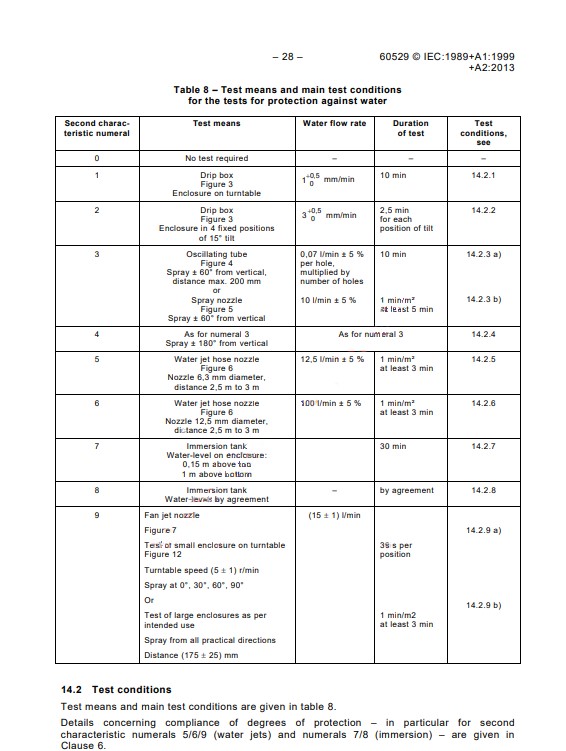
This high-pressure test involves spraying water from a specific nozzle at the product for a set time and distance.

The product passes if no harmful effects are observed. The test is done under controlled conditions, not with the equipment in use, warm, or exposed to wind over time.

An IP rating indicates how well a product resists water and dust in a clinical testing environment with set parameters.

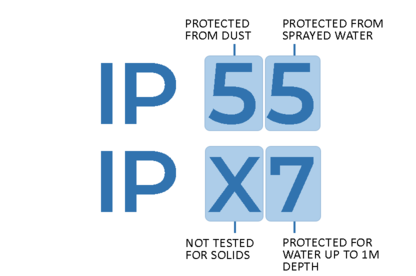
Ingress Protection (IP) ratings have two digits:

  • The first states the level of solid/dust resistance the device has been certified for. It has a maximum rating of 6.
  • The second digit relates to water resistance.

In reality, even the highest immersion rating of “8” has a maximum depth and duration, meaning the IP scale has no true “waterproof” rating.

Fig.1 Showing laboratory conditions for IEC 60529 test (NB: products do not have power for the duration of the test).

How do I make sense of the IP rating numbers?

Relying on a single lab-tested IP rating is a common mistake when buying EV charging equipment.

IP ratings, like IP54 or IP66, are based on controlled tests and don’t guarantee real-world performance.

IP54 means cables resist dust and splashes when connected but aren’t fully sealed—so they shouldn’t be submerged or used in persistent rain.

IP66 allows outdoor use, but prolonged exposure to heavy rain still requires extra protection.

Water-resistant simply means the device is better protected against water ingress, not waterproof.

The take-away

Choosing the right EV charging equipment involves more than just price. We recommend selecting a WorkSafe-compliant product that meets international standards, comes with a strong warranty, and is sold by a trusted company. Understanding how your charger works and caring for it properly is key to safety and long-term performance.

Getting the maximum life out of your EVSE requires a bit of care. During use the product will heat up. This can affect the protection the enclosure provides the internal space from water. Seals can warm up and expand. So just like a waterproof rating given to a sports watch, care must be taken to ensure that the portable charging cable is offered some shelter.