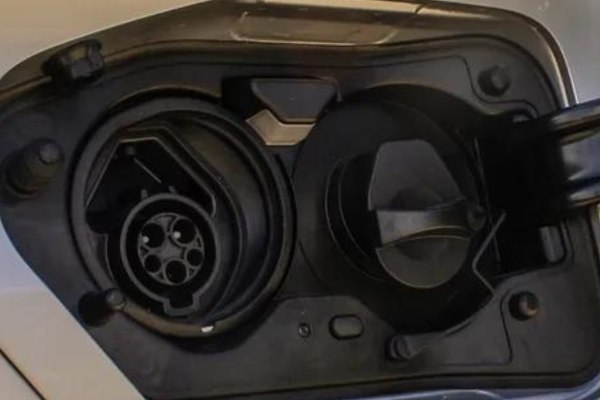
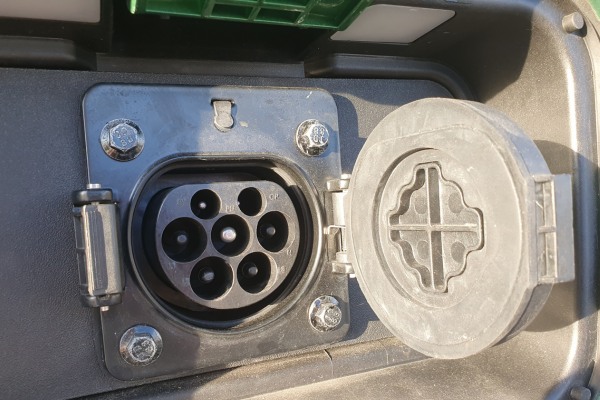
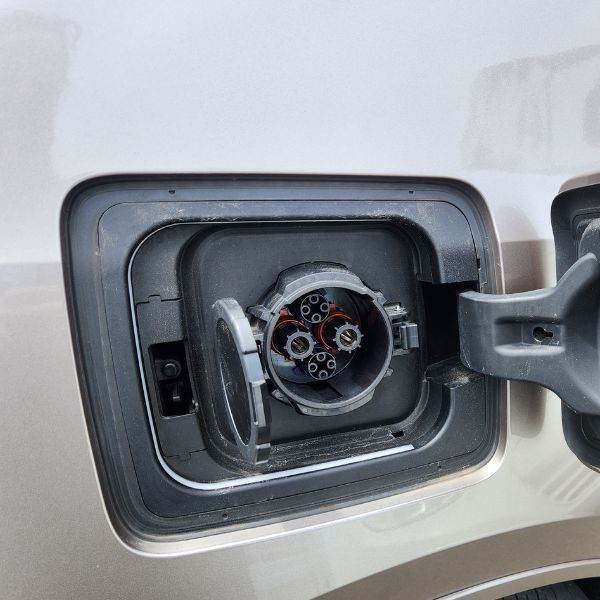
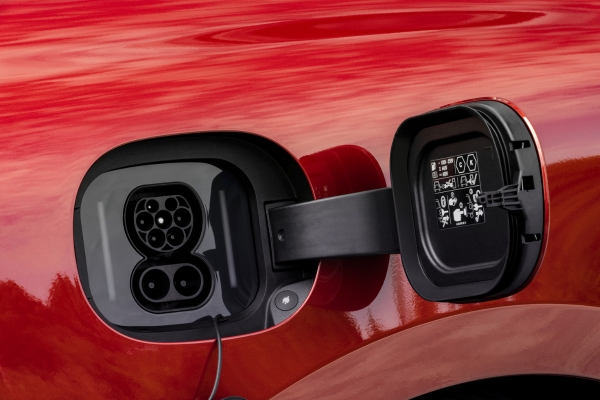
In New Zealand, EVs and PHEVs use either Type 1 or Type 2 plugs. Each Type is a different shape, so using the wrong one means it won’t fit your car.
To make things complicated, some EV/PHEV’s can be the same make and model, but still use different plug ‘types’, depending on their country of origin. For example, an ex-Japan Nissan leaf will be a Type 1, but a NZ-new Nissan Leaf will be a Type 2.
The CHAdeMO connector is relatively large and has a distinct round shape with multiple pins for power and communication between the vehicle and charger.
A CHAdeMO port is a type of connector used for DC fast charging of electric vehicles (EVs). It is one of the earliest and most widely adopted standards for fast charging, particularly in Japan, but also used in other parts of the world.
While CCS has become more dominant in Europe and North America, CHAdeMO is still widely used in Japan and remains compatible with many fast-charging networks globally.
The Combined Charging System (CCS)
The CCS connector has additional pins for DC fast charging, alongside the standard AC charging pins. This allows the same port to be used for both types of charging.
CCS is a versatile EV charging standard that combines both AC (alternating current) and DC (direct current) charging capabilities in a single connector. This system allows electric vehicles to use the same port for both slow charging (AC) and fast charging (DC), making it convenient and efficient for drivers.
16 Amp ‘Caravan Plugs’
New Zealand defaulted to the ‘Caravan’ plug (Commando/CEE) early on in the EV revolution. These plugs can carry a higher amp rating than the three-pin plug.
Advice from WorkSafe and Master Electricians is that these devices should be fitted with an RCD Type B (for detection of direct current (DC) in case of a car-side charging fault. In the very unlikely event of a vehicle’s onboard charger having a fault, there is a chance of DC going back into a switchboard, which could be an issue with potential fire risk (in the extreme).
The cost of the RCD Type B device and installation was often a deterrent to buyers (approx. $600+).
EV Power 16 Amp portable charging cables have 6ma DC detection built in! No need to buy a RCD Type B with our product. Buy with confidence. We have added this feature to all our portable ( IC-CPD ) devices.